Alternative Names:
syn. E. 'Perle von Nurnberg'
Narrative Description:
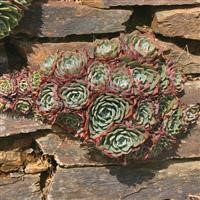
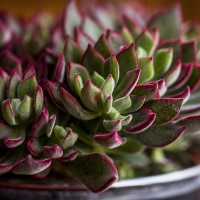
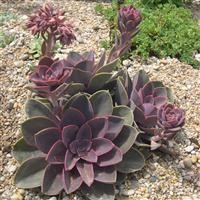
Beautiful pink, succulent rosettes which produce interesting flowering bracts in spring and summer.
Ideal Conditions:
Prefers full sun, or partial shade with moist soil or compost.
Possible Situation:
Perfectly suited for planting in gravel gardens, paved areas, rockeries and small containers. Try mixing with other succulents and alpines.
Resilience:
Tender
Habit:
Spreading
Height x Spread / Trail:
11 x 16 cm
Features:
Drought Tolerant
Typical Season:
Spring
Summer
Autumn
Winter
Flower Colour:
Foliage Colour:
pink
Flowering Time:
June - September
Planting Recommendations:
Raised Bed
Container
Rockery
Prefers:
Full Sun
Part Sun
Temperature Tolerance:
To keep this plant over winter it must be kept in a frost free area.
Plant Care:
Family:
CRASSULACEAE
Genus:
Echeveria
Cultivar:
Duchess of Nuremberg
Alternative Names:
syn. E. 'Perle von Nurnberg'
Category:
Succulents
Recommended Pot Sizes:
9cm
11cm
1Ltr
Pot Spacing:
Leave enough room so that foliage does not overlap within crop time.
Typical time required from pot to sale:
0 weeks over Winter
12 weeks in Spring / Summer
Based on producing a finished pot size of 1L for plug products and 2L for liner products. (*)
Growing Media / Irrigation / Water Capacity:
Well drained - keep dry
Feeding / Fertilser
(during crop time):
NPK balanced feeding
Feeding Frequency:
Requires infrequent feeding (Low EC)
Recommended pH:
Standard 5.0 to 5.5
Growth Regulation PGR:
Due to the current approval situation, please contact your PGR provider
Temperature During Production:
Medium crop 8 - 15°C
Temperature During Transport:
12-16°C
Available for Delivery:
March - April
Recommended Sales Window:
April - September
Forecast Availability:
| Wk/Yr: | 27/24 |
|---|---|
| Qty: | 5 |
Please note: this forecasted availability is a guide only. Quantities can be increased or produced earlier on request.
Common Pests:
Vine Weevil
Common Diseases:
|
100 Plants / Tray |
50 Plants / Tray |
100 Plants / Tray |
|
50 Plants / Tray |
50 Plants / Tray |
Additional Notes (*):
All information provided is based on producing a default finished pot size of 1L for our plug products, and 2L for 7cm and 9cm liner products. For alternative pot sizes please adjust cultural notes accordingly.
Finishing times - Based on average estimated climatic and environmental conditions, and are for guidance purposes only.
Temperature – These conditions assume a protected ornamental growing environment. Recommended growing is generally above 5°C.
Feeding – Does not specify controlled release or liquid fertiliser application. This choice will depend on your conditions, requirements and preferences – please contact your fertiliser consultant for suitable products to meet your requirements.
Growing media and pH – Is shown for guidance purposes only - please contact your growing media consultant for suitable growing media to meet your requirements.
Disclaimer
This information is for guidance purposes only and is based upon our own growing environment and experience during trials. It is wise to use your own knowledge about your growing conditions and local environment in order to make informed cultural decisions.